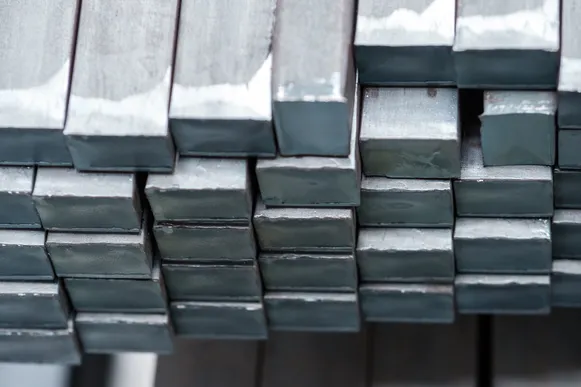
What Is Steel? Composition and Definition of Steel
What Is Steel? Composition and Definition of Steel
Steel is an alloy of iron and carbon, in which carbon acts as the main strengthening element. Thanks to its chemical composition and manufacturing processes, steel combines strength, hardness, and durability, making it one of the most important materials used in industry.
Table of Contents:
- Key Properties of Steel
- How Microstructure Affects Steel Properties
- How Chemical Composition Influences Steel Performance
- Alloying Elements in Steel and Their Role
- Phase Transformations in Steel
- Metallurgical Definition of Steel – Summary
- Main Steel Grades and Classification
- Frequently Asked Questions
An expert from Multistal & Lohmann explains:
„In the classical iron–carbon (Fe–C) system, steel is conventionally defined as an iron alloy containing up to approximately 2.0–2.1 wt% carbon (often given as 2.06 wt%, corresponding to the solubility limit of carbon in austenite at around 1147 °C). This means that in 100 g of such an alloy, at most about 2 g is carbon, while the remainder consists primarily of iron and possible alloying elements.
In practice, alloying elements such as manganese, chromium, or nickel can slightly modify the way steel hardens. However, the fundamental properties of steel are determined by its microstructure, the internal arrangement of the metal.
Microstructures can take various forms, such as ferrite, pearlite, bainite, or martensite. They develop during cooling of the steel and subsequent transformations in the solid state, depending on temperature, cooling rate, and the type of heat treatment applied.”
~ Jure Cesen, Vice President of Multistal & Lohmann
Steel is not only one of the most versatile engineering materials, but it is also widely used in construction, mechanical engineering, and tool manufacturing.
Key Properties of Steel
Steel is an exceptionally versatile material, and its properties make it suitable for use across many industries:
- High strength and fracture toughness – steel can withstand high loads and impacts, making it essential for construction, machinery, and tools.
- Good ductility and weldability – depending on the grade, steel can be easily formed, bent, or cut without cracking, and it can be welded without difficulty.
- Wide range of mechanical properties – through alloying and heat treatment, steel can be tailored to be either soft and ductile or hard and highly resistant.
- Recyclability – steel can be recycled repeatedly without losing its quality, making it an environmentally friendly material.
- Cost effectiveness – despite its high performance and versatility, steel remains relatively economical to produce and use.
From a metallurgical perspective, steel is defined by several key factors that determine its properties and applications:
- Microstructure–property relationships,
- Chemical composition and alloying system,
- Phase transformations.
How Microstructure Affects Steel Properties
The mechanical properties of steel largely depend on its microstructure (that is, the arrangement of phases, grains, and inclusions within the metal) as well as grain size. Different properties result from different combinations of these factors:
- Strength increases with higher carbon content, greater martensite fraction, and increased dislocation density.
- Toughness improves with fine grains, low carbon content, and nickel alloying.
- Hardenability depends on alloying elements such as chromium (Cr), molybdenum (Mo), and manganese (Mn), and can be evaluated using the Jominy End-Quench Test
- Wear resistance is enhanced by carbide precipitates formed with chromium (Cr), vanadium (V), molybdenum (Mo), or tungsten (W).
- Corrosion resistance in stainless steels requires a chromium content of at least 10.5% to form a protective passive layer.
In short, microstructure determines whether steel is hard, strong, wear-resistant, or corrosion-resistant, while proper alloy selection and heat treatment allow steel to be tailored for specific applications.
| What Is the Jominy Test?
The Jominy End-Quench Test is a standard method for determining steel hardenability (the ability of steel to develop a hardened structure upon cooling). A cylindrical steel specimen is heated to a high temperature and then rapidly cooled with a water jet applied to one end. After cooling, hardness is measured along the length of the sample, from the quenched end to the opposite side. The result shows how deeply the steel maintains a hardened structure and how alloying elements affect hardenability. |
How Chemical Composition Influences Steel Properties
Steel is an iron–carbon (Fe–C) alloy whose composition is often modified with additional alloying elements depending on the steel grade.
The carbon content in steel ranges from approximately 0.002% to 2.06%. Even such small amounts of carbon significantly increase the strength, hardness, and durability of iron, which is why steel is one of the most important engineering materials worldwide. For Multistal & Lohmann, a supplier of high-quality steel materials, this relationship is especially important:
- Higher carbon content – higher hardness and strength.
- Lower carbon content – greater ductility and easier forming and welding.
Alloying Elements in Steel and Their Role
Steel may contain various alloying elements that modify its properties
- Manganese (Mn) and silicon (Si) strengthen steel and assist in deoxidation during production.
- Chromium (Cr), nickel (Ni), and molybdenum (Mo) improve corrosion resistance and hardenability.
- Vanadium (V), niobium (Nb), and titanium (Ti) form precipitate carbides and nitrides, refine grain structure, and increase strength.
- Boron (B), even in very small amounts significantly increases hardenability and wear resistance; used in components exposed to harsh operating conditions such as cranes, concrete mixers, and silos.
Thanks to these alloying additions, steel can be precisely adapted to applications ranging from structural components to tools and machinery.
Phase Transformations in Steel
The properties of steel are strongly influenced by phase transformations – changes in its internal structure caused by temperature variations and heat treatment. Different phases give steel different characteristics, such as hardness, strength, and ductility:
- Ferrite (α-Fe) – a soft and ductile low-carbon steel microstructure. Ferritic steel sheets are designed for operation at high temperatures (from 600 up to even 900 °C).
- Austenite (γ-Fe) – a phase with high carbon solubility, stable at elevated temperatures.
- Cementite (Fe₃C) – a hard and brittle iron carbide.
- Martensite – a very hard structure formed during rapid cooling (quenching).
- Bainite – a fine-grained microstructure produced by controlled cooling.
- Pearlite – a lamellar mixture of ferrite and cementite formed during the eutectoid reaction.
Key transformations:
- Eutectoid transformation – occurs when carbon steel cools through approximately 727 °C, producing structures that are easy to process, weld, cut, and bend.
- Martensitic transformation – diffusionless transformation during rapid quenching, producing extremely high hardness and wear resistance.
By controlling these transformations through heat treatment (annealing, quenching, tempering, and normalizing) steel can be tailored to be soft and formable or hard and highly durable.
Metallurgical Definition of Steel – Summary
From a metallurgical point of view, steel is an alloy of iron. Its mechanical properties depend on the distribution of carbon, both in solid solution and in the form of carbides, as well as on phase transformations in the iron–carbon system. These properties are often further modified by alloying elements.
Steel’s versatility results from the combination of three key factors:
- Interstitial strengthening by carbon.
- Multiple possible microstructures, each providing different mechanical characteristics.
- Controllable phase transformations, achieved through precise heat treatment.
This combination makes steel a uniquely adaptable material suitable for lightweight structures as well as highly durable tools and machinery.
Main Steel Grades and Classification
Steel is divided into grades that differ in chemical composition and application. Multistal & Lohmann, a leading steel distributor, offers high-quality steel:
- Alloy steels (e.g., for heat treatment) – contain additional alloying elements such as chromium, nickel, or molybdenum, which improve hardenability, strength, and corrosion resistance. They are used in the automotive, machinery, and energy industries.
- Stainless steels – contain at least 10.5% chromium, which provides resistance to rust and chemical attack. They are used in kitchens, medical applications, and the food and chemical industries.
- Tool steels (cold-work and hot-work grades) – special steels with very high hardness and wear resistance, used in the production of cutting tools, injection molds, dies, and forming tools.
- Structural steel grades – used in construction and engineering, providing strength and durability for load-bearing elements such as beams, bridges, and machine frames.
Contact Our Export Department
Frequently Asked Questions
Is steel the same as metal?
No. Steel is a type of metal, but not all metals are steel. “Metal” is a broad term referring to elements or alloys with metallic properties, while steel is a specific iron–carbon alloy designed for high strength and durability.
What is steel used for?
Steel is widely used in construction, mechanical and automotive engineering, the food and chemical industries (especially stainless steel), and in the production of tools such as knives, molds, and dies.
What is the difference between cast steel and cast iron?
Cast steel contains up to 2.06% carbon and is stronger and more ductile, making it easier to weld and machine. Cast iron contains 2–4% carbon, is harder and more brittle, but offers excellent wear resistance.
What elements make up steel?
Steel consists mainly of iron and carbon, with possible additions of manganese, silicon, chromium, nickel, molybdenum, vanadium, niobium, titanium, or boron, depending on the grade.
What types of steel are available on the market?
The table below shows some of the steel types available on the market.
| Type of Steel | Typical Applications |
| Carbon Steels | Structures, machine components, tools |
| Alloy Steels | Automotive, machinery, and energy industries |
| Stainless Steels | Kitchen equipment, medical applications, food and chemical industries |
| Tool Steels | Manufacturing of cutting tools |
| Structural Steels | Load-bearing elements |